The Longevity Lifestyle: Science-Backed Habits for a Longer, Healthier Life by Frank Jonker
In our fast-paced world, the quest for longevity is no longer just about living longer—it’s about living better for longer. Enter the “longevity lifestyle”, a holistic, science-driven approach that combines nutrition, movement, mental wellness, and cutting-edge techniques like biohacking to help people extend not only their lifespan but their healthspan—the years we live free of chronic illness.
If you’re looking to add more healthy years to your life, this post is your roadmap. Let’s explore the science, trends, and everyday habits that promote a longer, more vibrant life.
What is the Longevity Lifestyle?
The longevity lifestyle is built on the idea of preventive health—small, sustainable actions taken daily that compound over time to protect and enhance our bodies and minds. It blends modern science, ancestral wisdom, and emerging technology to support aging with vitality. It’s not about fads or gimmicks—it’s about evidence-based habits that work.
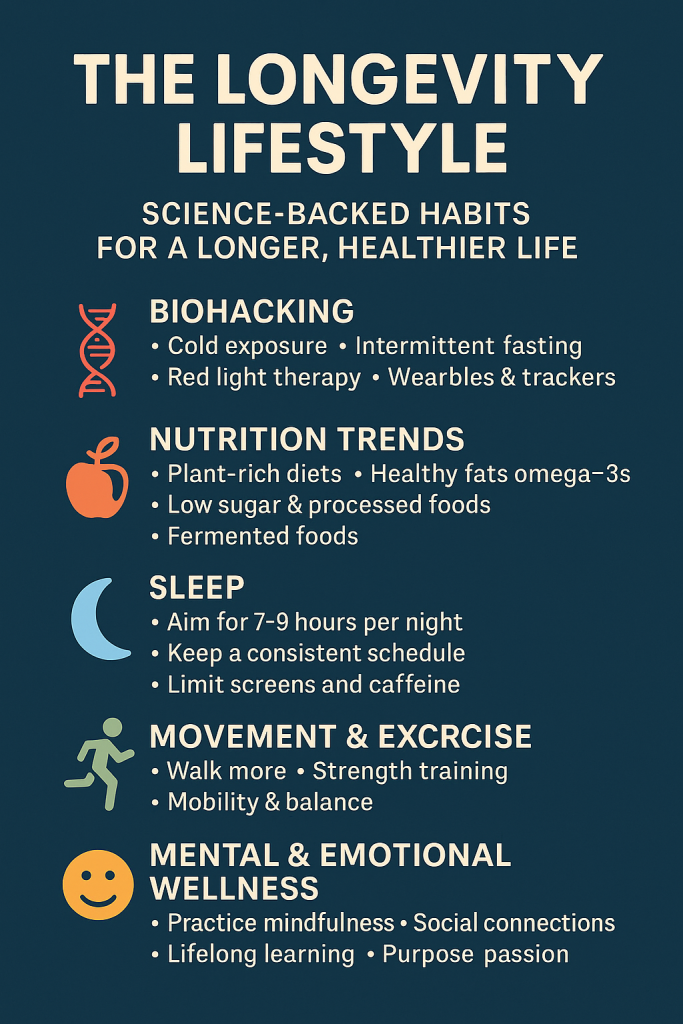
1. Biohacking: Taking Control of Your Biology
Biohacking is the art and science of changing your environment and lifestyle to “hack” your body’s biology and optimize performance. While it may sound futuristic, many biohacking techniques are simple and accessible:
Popular Biohacking Techniques:
Cold exposure: Ice baths or cold showers may reduce inflammation and boost immunity.
Intermittent fasting: Supports cellular repair, metabolic health, and longevity.
Red light therapy: Believed to enhance cellular energy and reduce oxidative stress.
Wearables and trackers: Devices like Oura rings or WHOOP bands help monitor sleep, recovery, and activity levels.
Scientific note: Research into cellular aging and senescence (cell death) shows that lifestyle factors can influence how fast your cells age—making biohacking a tool to slow down the biological clock.
2. Nutrition Trends That Promote Longevity
What you eat is one of the most powerful tools for living longer. The longevity lifestyle emphasizes anti-inflammatory, nutrient-dense, and gut-friendly foods.
Longevity-Boosting Diet Principles:
Plant-rich diets: Blue Zones (regions where people live the longest) show high consumption of legumes, vegetables, and whole grains.
Healthy fats: Omega-3 fatty acids from fish, nuts, and seeds fight inflammation.
Low sugar & processed foods: Excess sugar ages the body at the cellular level.
Fermented foods: Kimchi, yogurt, and kombucha support gut health.
Blue Zone eating patterns: Eat until 80% full, focus on whole, natural foods, and dine in community settings when possible.
Nutrition Trend to Watch: The rise of nutrigenomics—how food influences gene expression—is making personalized nutrition a key player in longevity.
3. Sleep: The Silent Pillar of Longevity
You can eat well, exercise daily, and take all the supplements in the world—but if your sleep is suffering, your health will too.
Why Sleep Matters:
Cellular repair: Most body repair and detoxification happen during deep sleep.
Hormonal balance: Poor sleep disrupts insulin, cortisol, and appetite hormones.
Brain health: Sleep clears out amyloid plaque, reducing the risk of Alzheimer’s.
Immune system: Consistent, quality sleep enhances immune resilience.
Tips for Better Sleep:
Stick to a consistent sleep schedule (even on weekends).
Avoid screens and blue light an hour before bed.
Limit caffeine after 2 p.m.
Keep your bedroom cool, dark, and quiet.
Longevity tip: Track your sleep with apps or wearables and prioritize 7–9 hours nightly.
4. Movement & Exercise: Move Every Day, Live Longer
You don’t have to train like an athlete to gain longevity benefits. Daily, moderate movement can reduce the risk of chronic diseases and keep you physically and mentally sharp.
Best Practices:
Walk more: Walking 7,000–10,000 steps per day is linked to longer lifespan.
Strength training: Muscle mass protects against metabolic decline and injuries.
Mobility & balance: Yoga, Pilates, or tai chi promote flexibility and fall prevention.
High-intensity bursts: Short bursts of cardio can support heart health and metabolism.
Key idea: It’s less about pushing harder and more about moving consistently.
5. Mental & Emotional Wellness: A Hidden Key to Longevity
Stress isn’t just unpleasant—it’s a major aging accelerator. Chronic stress can damage cells, shorten telomeres (protective caps on DNA), and increase disease risk.
Mental Longevity Habits:
Mindfulness & meditation: Just 10 minutes a day can lower stress hormones.
Social connections: Loneliness is as harmful as smoking 15 cigarettes a day.
Lifelong learning: Staying mentally engaged helps maintain cognitive health.
Purpose and passion: A strong sense of purpose is a common trait among centenarians.
Final Thoughts: Start Small, Stay Consistent
The longevity lifestyle isn’t about perfection—it’s about consistency. Choose 2–3 habits to start with, like improving your sleep, adding more vegetables to your meals, or getting daily sunlight exposure. Over time, these choices build a foundation for a longer, healthier, and more energized life.
As science evolves, so will our understanding of aging—but the basics remain the same: sleep well, eat clean, move often, stress less, and stay connected.
💡 Quick Longevity Checklist:
✅ Intermittent fasting or time-restricted eating
✅ Sleep 7–9 hours consistently
✅ Move 30+ minutes daily
✅ Eat mostly plants and whole foods
✅ Limit sugar, alcohol, and processed junk
✅ Practice mindfulness and reduce stress
✅ Stay curious, connected, and purposeful
Want to live not just long—but well?
Adopting the longevity lifestyle could be the most important investment you make.