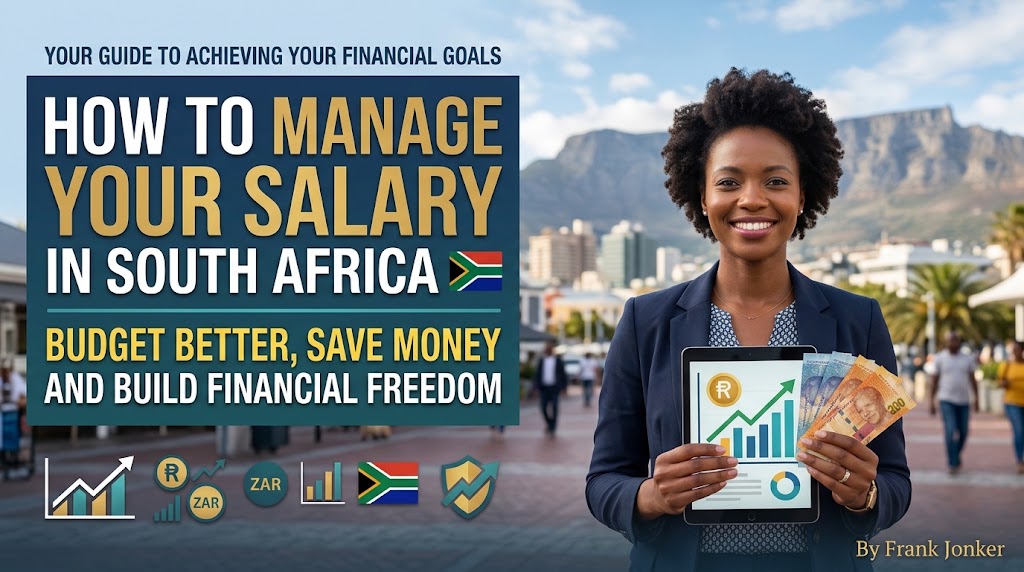
Introduction: Make Your Salary Work for You
Do you find yourself wondering where your salary went before the end of the month? For many South Africans, managing money can be challenging. Rising living costs, groceries, electricity, transport, rent, school expenses and debt repayments can leave very little money available for savings.
But improving your financial situation doesn’t always start with earning more money. It can start with learning how to manage the money you already have.
By creating a realistic budget, reducing unnecessary expenses and building an emergency fund, you can take practical steps towards greater financial stability.
Whether you earn R5,000, R10,000 or R25,000 per month, understanding how to manage your salary can help you make more informed financial decisions.
In this article, we’ll explore practical money management tips for South Africans and explain how small, consistent financial habits can help you work towards financial freedom.
1. How to Budget on a South African Salary
A budget is a plan for how you will spend, save and manage your income. It helps you understand where your money goes and identify areas where you can make improvements.
The first step is to calculate your monthly take-home salary after deductions. This is the amount you actually receive in your bank account.
Next, list your expenses.
Identify your essential expenses
These usually include:
Rent or home loan repayments
Electricity and water
Groceries and household supplies
Transport, fuel or public transport
Medical expenses and insurance
School fees and childcare
Debt repayments
Phone and internet costs
Once you have listed your essential expenses, calculate how much remains for savings, personal spending and other financial goals.
Example: A monthly budget on a R10,000 salary
The following example illustrates how a person might allocate a take-home salary of R10,000.
| Expense | Monthly budget |
|---|---|
| Housing and utilities | R3,000 |
| Groceries | R1,800 |
| Transport | R1,200 |
| Debt repayments | R800 |
| Insurance and medical costs | R700 |
| Phone and internet | R300 |
| Personal and family expenses | R700 |
| Emergency savings | R500 |
| Other planned expenses | R1,000 |
| Total | R10,000 |
This is an example, not a universal recommendation. Your actual budget will depend on your household, location, dependants and financial commitments.
If your essential expenses already use most or all of your salary, do not force an unrealistic savings target. Focus on covering necessities, reviewing costs and finding sustainable ways to improve your financial position.
Try budgeting before you spend
A useful habit is to prepare your budget on payday. Decide how much you need for essential bills, debt repayments, savings and everyday spending before using your money for non-essential purchases.
You can use a spreadsheet, notebook or budgeting app to track your expenses.
The goal is simple: know where your money is going instead of wondering where it went.
A practical guide to entrepreneurship with low startup costs
2. Practical Ways to Reduce Monthly Expenses in South Africa
Reducing expenses can free up money for savings, debt repayment and important financial goals. You don’t need to eliminate everything you enjoy. Start by identifying expenses that provide little value compared with their cost.
Save money on groceries
Groceries are a major expense for many households. Planning ahead can help you reduce waste and avoid unnecessary purchases.
Try these practical strategies:
Plan your meals for the week.
Write a shopping list before visiting the supermarket.
Compare prices and check unit costs.
Buy suitable non-perishable products when they offer genuine value.
Prepare meals at home more often.
Use leftovers safely rather than throwing food away.
Avoid buying items simply because they are on special.
A discount is only a saving if the purchase fits your needs and budget.
Reduce transport costs
Transport can take up a significant portion of your salary.
Depending on your circumstances, consider carpooling with trusted colleagues, combining errands into fewer trips, comparing public transport options or planning routes more efficiently.
If you own a vehicle, keep up with appropriate maintenance and consider the full cost of ownership, including fuel, insurance, servicing and repayments.
Review subscriptions and recurring payments
Look through your bank statements for subscriptions, memberships and recurring charges you no longer need.
Cancel unused services and compare alternatives before renewing contracts.
Even modest monthly savings can add up over a year.
Cut unnecessary impulse spending
Before making a non-essential purchase, ask yourself whether you need the item now and whether it fits your budget.
One helpful strategy is to wait 24 hours before buying something you had not planned to purchase. For more expensive items, consider waiting several days.
This gives you time to decide whether the purchase is genuinely worthwhile.
Review debt and banking costs
Check your bank fees, insurance premiums and credit agreements. Compare available options where appropriate, and pay attention to the total cost of borrowing rather than only the monthly instalment.
If you have expensive debt, create a realistic repayment plan that still allows you to cover essential living costs.
The benefit: Money saved by reducing unnecessary expenses can be redirected towards your emergency fund and longer-term financial goals.
3. How to Build an Emergency Fund on a Small Salary
An emergency fund is money set aside for unexpected expenses, such as urgent household repairs, essential car repairs, unexpected medical costs or a temporary loss of income.
Without emergency savings, you may have to borrow money when something goes wrong. This can increase your financial pressure through interest charges and additional repayments.
Start with a small savings target
You don’t need a large amount of money to begin building an emergency fund.
Set an initial goal of R500 or R1,000. Once you reach it, continue building your savings gradually.
You can work towards the following milestones:
Milestone 1: Your first R500
Start with a manageable amount and establish the habit of setting money aside.
Milestone 2: R1,000 to R2,000
Build a small financial buffer that may help with certain unexpected expenses.
Milestone 3: One month of essential expenses
Calculate the cost of your basic needs for one month and use this as your next target.
Milestone 4: Three to six months of essential expenses
A common longer-term goal is to save enough to cover three to six months of essential living expenses. The appropriate amount depends on your job security, family responsibilities, health coverage and other circumstances.
How much can you save in a year?
Consider what happens when you save a consistent amount every month.
| Monthly savings | Total contributions after 12 months |
|---|---|
| R100 | R1,200 |
| R250 | R3,000 |
| R500 | R6,000 |
| R750 | R9,000 |
| R1,000 | R12,000 |
These totals exclude interest, fees and withdrawals.
If your budget is tight, begin with what you can genuinely afford. Even a small contribution can help you build a sustainable savings habit.
Where should you keep your emergency fund?
Consider a suitable savings account that offers access to your money when you need it. Compare interest rates, fees, withdrawal conditions and minimum balance requirements.
Keeping emergency savings separate from your everyday spending account may also help you avoid spending the money accidentally.
Use the fund for genuine emergencies rather than routine shopping, entertainment or predictable annual bills. Planned expenses should have their own budget.
4. Develop a Salary-Day Routine
A consistent payday routine can help you manage your money more effectively.
Instead of spending first and saving whatever remains, give your income a purpose from the beginning of the month.
Follow these five steps:
Check your income: Confirm the amount deposited into your account.
Prioritise necessities: Allocate money for housing, food, utilities, transport and essential commitments.
Manage debt: Make required repayments and avoid unnecessary new borrowing.
Save what you can afford: Transfer a manageable amount into your emergency fund when your essential needs are covered.
Set a spending limit: Decide how much you can spend each week on non-essential purchases.
At the end of the month, review your spending. Identify what worked, what did not and what you can improve next month.
Consistency matters more than creating a perfect budget on your first attempt.
5. Avoid Common Money Management Mistakes
Even people who earn a reasonable salary can experience financial difficulties when their spending habits undermine their goals.
Increasing your spending whenever your income increases
When your salary increases, you may feel tempted to upgrade your lifestyle immediately.
Consider using part of any increase to build savings, reduce expensive debt or contribute towards long-term goals before increasing discretionary spending.
Relying on credit to cover everyday expenses
Repeatedly borrowing money to cover routine expenses can create a cycle in which future income is committed to previous spending.
If your income is consistently insufficient for essential expenses, review your budget and consider seeking appropriate financial or debt guidance.
Ignoring small purchases
Small expenses can add up over time. Track them for a few weeks to understand your spending habits.
The aim is not to feel guilty about every purchase, but to make sure your money supports your priorities.
Giving up when you cannot save
Unexpected expenses can disrupt even a well-planned budget.
If you cannot save in a particular month, return to your plan when circumstances improve. Adjust your targets when necessary instead of abandoning your financial goals altogether.
6. Understand Saving, Investing and Financial Freedom
Saving and investing serve different purposes.
Savings are generally useful for emergencies and shorter-term goals, particularly when you need access to your money.
Investing is usually intended for longer-term objectives and involves risk. Depending on the investment, you may lose some or all of your invested capital.
Before investing, consider your financial goals, timeframe, outstanding expensive debt, emergency savings and ability to tolerate losses. Understand the fees and risks involved, and be wary of promises of guaranteed high returns.
Financial freedom means different things to different people. For some, it means having enough savings to handle unexpected expenses. For others, it means becoming debt-free, preparing for retirement or having more flexibility in their working lives.
You do not need to achieve every goal immediately. Start by identifying what financial security means to you and build a realistic plan to move towards it.
7. Set Financial Goals You Can Achieve
Clear goals give you a reason to keep managing your money consistently.
Your goals might include:
Building an emergency fund.
Paying off expensive debt.
Saving towards a home deposit.
Funding education or professional training.
Preparing for retirement.
Starting a small business.
Reducing your dependence on borrowing.
Write down each goal, estimate how much it will cost and decide how much you can contribute each month.
For example, if you want to save R6,000 and can put aside R500 per month, you can reach your target in 12 months, assuming no withdrawals or interest.
Review your goals regularly and adjust them as your circumstances change.
Small achievements can help you stay motivated and demonstrate that your financial habits are making a difference.
8. Take Control of Your Financial Future with From Salary to Financial Freedom
Learning to manage your salary is an important step towards financial security. The next step is putting that knowledge into practice.
If you want to improve your budgeting habits, manage expenses more effectively and work towards your financial goals, explore our ebook, From Salary to Financial Freedom.
This ebook is designed for readers who want to develop better money habits and take practical steps towards a stronger financial future.
Discover ideas to help you:
Develop a more effective personal budget.
Make informed spending decisions.
Build a consistent savings habit.
Work towards an emergency fund.
Set realistic financial goals.
Develop a more disciplined approach to money management.
Whether you are starting your financial journey or looking for ways to improve your existing habits, investing time in your financial education can help you make better-informed decisions.
Ready to take the next step?
Visit Welkomcity.africa and discover From Salary to Financial Freedom.
Start learning, take practical action and work towards a future where you have greater control over your money.
Your salary is the starting point. Your financial habits can help shape your future.
Frequently Asked Questions
How can I manage my salary better in South Africa?
Start by calculating your take-home income, listing your essential expenses and creating a realistic budget. Track your spending, review unnecessary costs and set achievable financial goals.
How can I save money on a low salary?
Focus on essential expenses first. Plan grocery shopping, reduce waste, review recurring payments and avoid unnecessary purchases. Begin saving a small amount if your budget allows and increase it when your circumstances improve.
How much should I have in an emergency fund?
A common long-term target is three to six months of essential living expenses. Start with a smaller milestone, such as R500 or R1,000, and gradually increase your savings.
What is the best way to reduce monthly expenses?
Review your spending and identify costs you can reduce without compromising essential needs. Grocery planning, comparing transport options, cancelling unused subscriptions and limiting impulse purchases are useful starting points.
Can I work towards financial freedom on an ordinary salary?
Yes. You can take meaningful steps towards greater financial security by budgeting carefully, managing debt, building savings and setting realistic goals. Your progress will depend on your income, expenses and individual circumstances.
What should I do first if I want to improve my finances?
Begin by understanding your current financial position. Write down your income and expenses, identify your most important financial priorities and create a realistic plan for the coming month.
Disclaimer: This article provides general educational information and is not personalised financial, investment, tax or debt advice. Consider consulting an appropriately qualified professional for advice specific to your circumstances.