By Frank Jonker | Digital Marketing & Online Business Growth – October 2026

YouTube is more than a platform for watching videos. It is a powerful marketing tool that allows businesses, entrepreneurs, content creators and personal brands to reach new audiences, share knowledge, build credibility and generate income.
However, success on YouTube does not happen simply by uploading videos and hoping people will watch them. You need a clear content strategy that attracts the right audience, delivers value, encourages viewers to return and turns attention into meaningful results.
Whether you are a small business owner, digital marketer, educator, entrepreneur or aspiring YouTuber, a well-planned strategy can help you stand out in a competitive online environment.
In this comprehensive guide, you will discover how to plan, create, optimise, publish and promote YouTube content that works towards your goals.
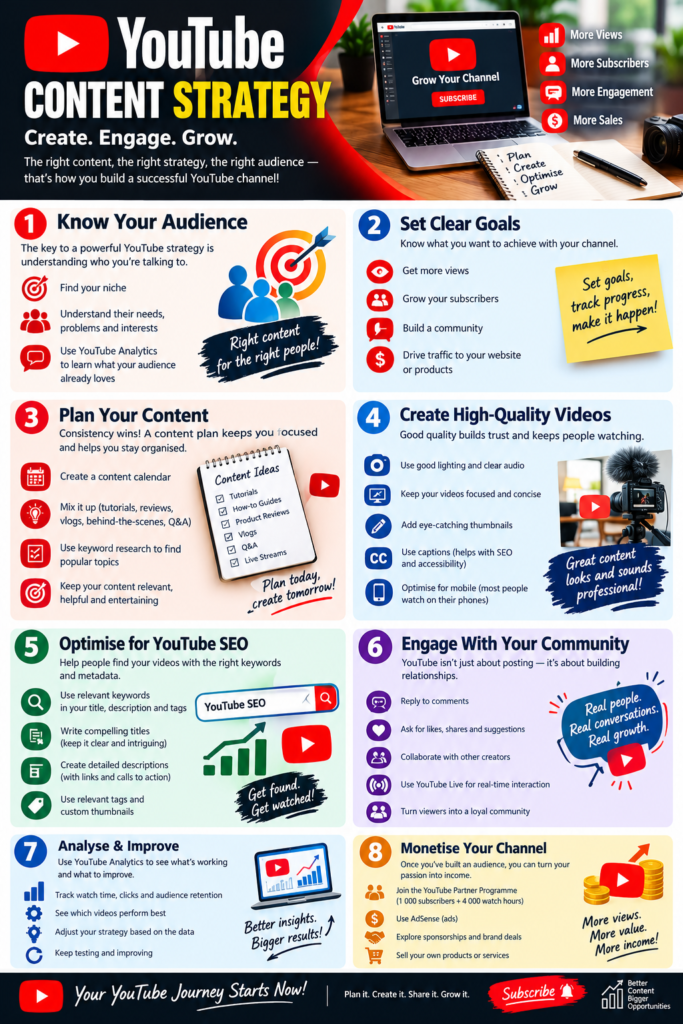
1. 🎯 Define Your YouTube Goals

Before recording your first video, decide what you want your YouTube channel to achieve. A clear goal helps you choose the right topics, video formats and calls to action.
Your objectives might include:
📈 Grow your audience: Attract subscribers who are interested in your content.
🏆 Build brand awareness: Make more people familiar with your business, products or services.
🤝 Establish trust: Share useful information that demonstrates your knowledge and experience.
💰 Generate sales: Promote products, services, courses, ebooks or other relevant offers.
🌐 Drive website traffic: Encourage viewers to visit your website or online store.
👥 Build a community: Create a loyal audience that participates in discussions and returns for future videos.
Practical tip: Choose one primary goal for each video. A tutorial might aim to educate viewers, while a product demonstration might encourage them to visit your website.
2. 👥 Understand Your Target Audience

The most effective content begins with understanding the people you want to reach.
Ask yourself:
Who are my ideal viewers?
What problems do they need to solve?
What questions are they searching for online?
What interests, challenges or ambitions do they have?
What type of content would make them subscribe and return?
For example, if your target audience is small business owners in South Africa, useful topics could include affordable digital marketing, creating a business website, promoting products online, improving customer engagement and using social media to attract customers.
When you understand your audience, you can create videos that address real needs instead of producing content without a clear purpose.
The benefit: Relevant content gives viewers a reason to click, watch, trust your advice and explore more of your channel.
3. 💡 Develop a Powerful Content Plan
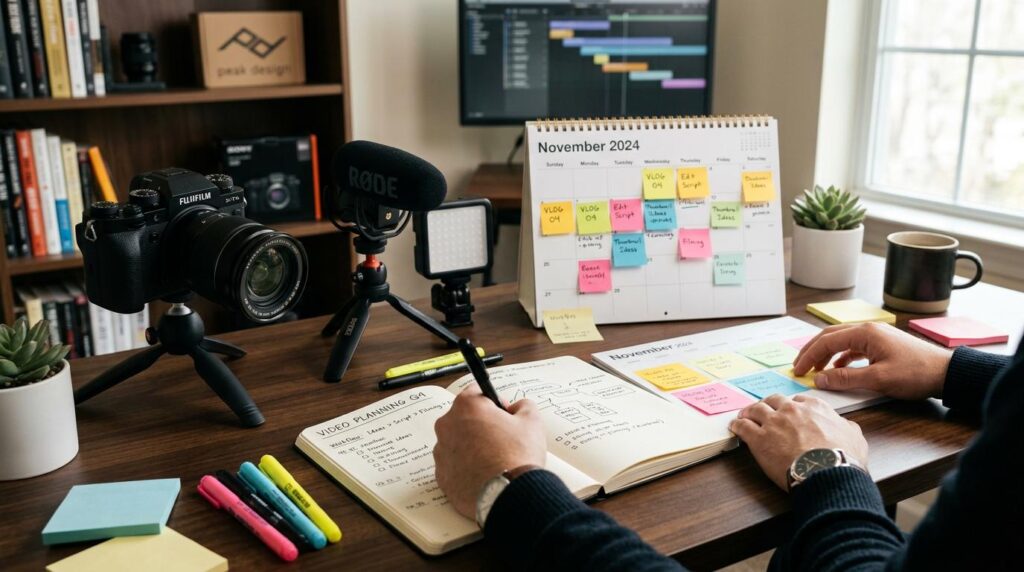
Consistency becomes much easier when you know what you will publish and why. Instead of deciding on a new video topic every day, develop a content plan around the interests of your audience.
One effective approach is to organise your videos into content pillars.

Educational content
Teach viewers how to solve problems, learn skills or complete tasks.
Example: “How to Market Your Small Business on YouTube.”

Product demonstrations and reviews
Show how a product works, explain its benefits and help viewers make informed decisions.
Example: “How to Use Canva to Create Professional Marketing Posters.”

Tips, insights and industry knowledge
Share practical advice, lessons learned, trends and strategies relevant to your audience.
Example: “Five Digital Marketing Mistakes Small Businesses Should Avoid.”

Behind-the-scenes and personal stories
Show your process, introduce your team, explain how you work and share experiences that help viewers connect with your brand.
Example: “A Day in the Life of a Digital Content Creator.”
These content pillars give your channel direction while leaving room to experiment with new ideas.
4. 🎥 Create High-Quality, Valuable Videos
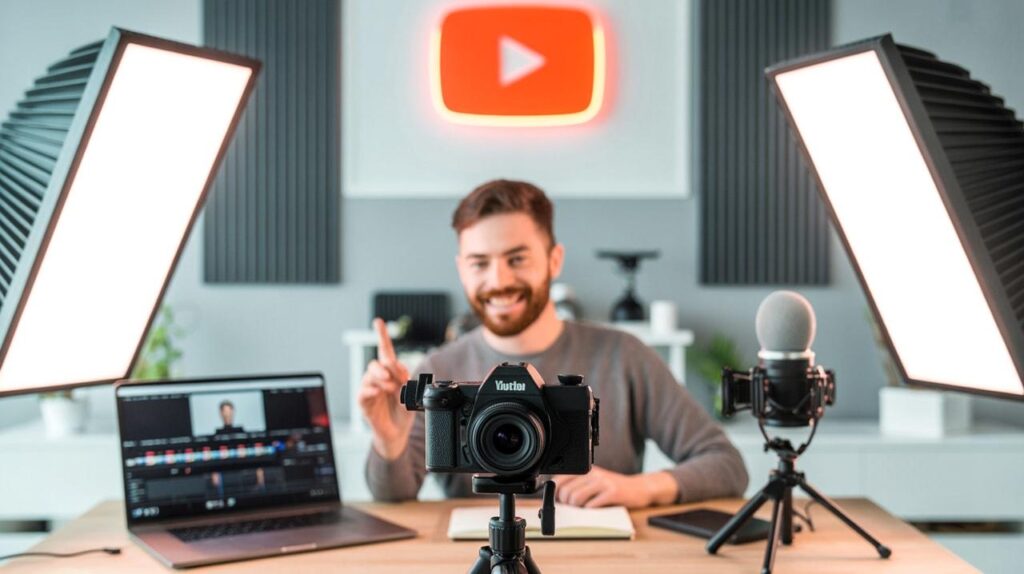
High-quality content does not necessarily require expensive equipment. What matters most is that your videos are useful, clear, engaging and easy to follow.
Focus on these essential elements:
Clear audio: Viewers should be able to understand every word without struggling to hear you.
Good lighting: Use natural light or an affordable light to make your videos look professional.
Stable footage: Use a tripod or stable surface to avoid distracting camera movement.
Engaging presentation: Speak naturally, use examples and explain concepts in a way your audience understands.
Useful editing: Remove unnecessary pauses, add relevant visuals and keep the video moving.
Captions and accessibility: Make your content easier to follow for viewers who prefer reading along or cannot listen to audio.
Consistent branding: Use recognisable colours, graphics, fonts and a consistent presentation style.
Structure your videos for maximum impact
A simple video structure can help you hold viewers’ attention.
1. Hook — capture attention
Start with a question, problem or compelling benefit. Tell viewers why the video is worth watching.
2. Main content — deliver value
Explain the topic clearly, demonstrate your method and provide practical steps viewers can apply.
3. Conclusion — reinforce the benefit
Summarise the key lesson and recommend one useful next step.
4. Call to action — encourage action
Invite viewers to subscribe, leave a comment, watch a related video or visit your website when relevant.
Avoid spending too much time on lengthy introductions. Get to the point quickly and make sure your video delivers on the promise made by its title and thumbnail.
5. 🔎 Optimise Your Videos for YouTube SEO
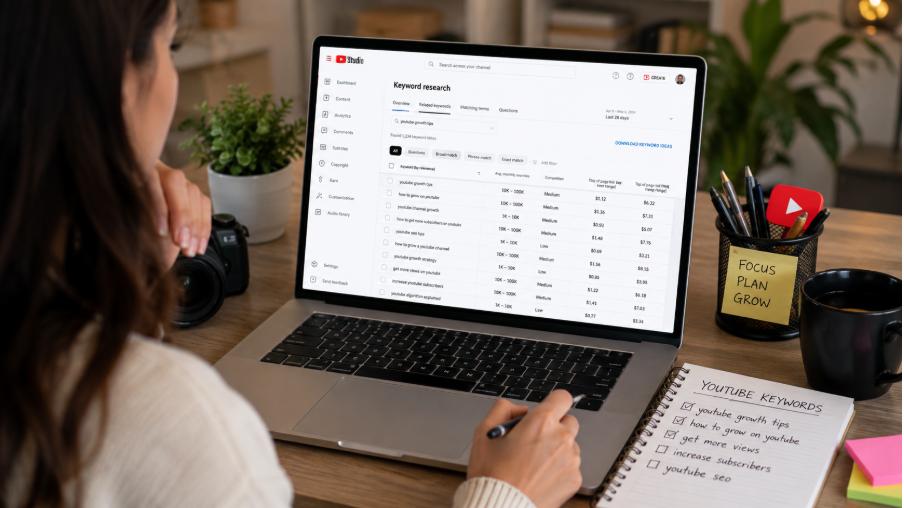
YouTube is a video-sharing platform and a search engine. Many people use it to find tutorials, product reviews, answers to questions and entertainment.
YouTube SEO helps the platform understand your content and helps potential viewers discover it through relevant searches.
Essential YouTube SEO techniques
Research relevant keywords. Identify the words and phrases your audience uses when searching for information. You can use YouTube search suggestions, audience questions and keyword research tools to generate ideas.
Write compelling titles. Make your title descriptive, specific and interesting without misleading viewers.
For example:
Weak: “My New Video”
Better: “YouTube Marketing for Beginners: 7 Practical Tips”
Better: “How Small Businesses Can Use YouTube to Attract Customers”
Design eye-catching thumbnails. Use clear imagery, strong contrast and a few readable words. Your thumbnail should complement the title rather than repeat it entirely.
Write useful descriptions. Explain what viewers will learn, include relevant search phrases naturally and add links to useful resources.
Organise content into playlists. Group related videos so viewers can easily discover more content on the same topic.
Use relevant hashtags and tags appropriately. Hashtags can help people explore related content, while video tags generally play a limited discovery role compared with the title, thumbnail and other viewer-response signals.
Add chapters when useful. Timestamps help viewers navigate longer videos and find the sections most relevant to them.
Remember: SEO is not about stuffing your video with keywords. It is about accurately describing useful content and matching it to the right audience.
6. 💬 Build Engagement and a Loyal Community

YouTube growth is not just about accumulating views. It is also about building relationships with people who value your content.
A loyal audience is more likely to return, share videos, participate in discussions and explore other content you publish.
Here are practical ways to encourage engagement:
Ask meaningful questions: Invite viewers to share their experiences, opinions or challenges.
Respond to comments: Answer questions and acknowledge useful feedback.
Use community posts: Share polls, updates, images and questions when the feature is available to your channel.
Create content based on feedback: Turn recurring questions into future videos.
Use YouTube Live: Interact with viewers in real time when live streaming suits your audience.
Encourage sharing: Explain who might benefit from the video and invite viewers to pass it along.
Collaborate with relevant creators: Reach new audiences through useful partnerships.
For example, a video about online marketing could end with this question:
“What is your biggest challenge when promoting your business online? Share it in the comments — your question could inspire our next video.”
This encourages genuine discussion and helps you discover future content opportunities.
7. 📅 Publish Consistently With a Content Calendar

Consistency helps your audience know what to expect and gives you a repeatable process for producing content. However, consistency does not mean publishing a video every day regardless of quality.
Choose a schedule that fits your time, resources and goals.
For example, you could publish one full-length video each week and create two or three Shorts from useful moments in that video. Adjust the schedule as you learn what your audience enjoys.
Here is an example of a four-week content calendar for a small business marketing channel.
Week | Main video | Supporting content |
|---|---|---|
1 | How to Market Your Business Online | Short tips and a community poll |
2 | How to Create Engaging Videos | A quick filming tutorial |
3 | Five Common Marketing Mistakes | A short video highlighting one mistake |
4 | How to Turn Viewers Into Customers | A practical checklist or Q&A |
Use this as a starting point rather than a rigid rule. Review your results and adapt the schedule to your audience.
8. 📱 Use YouTube Shorts to Reach New Viewers

YouTube Shorts can help you introduce your content to people who may not yet know your channel.
Short-form videos are particularly useful for sharing one clear idea, demonstrating a quick tip or highlighting a compelling moment from a longer video.
Ideas for Shorts include:
⚡ One-minute tutorials.
💡 Quick business and marketing tips.
🎬 Behind-the-scenes clips.
❓ Answers to frequently asked questions.
🔥 Common mistakes and how to avoid them.
📌 Highlights from longer educational videos.
Make each Short valuable on its own. Where relevant, connect it to a related full-length video so interested viewers can explore the subject in greater detail.
Do not assume that every viewer who watches a Short will become a long-form viewer or subscriber. Measure how well your Shorts support your broader channel goals.
9. 📊 Measure Your Results With YouTube Analytics

A powerful content strategy is built on continuous improvement. YouTube Analytics helps you understand which videos attract viewers, how people respond to your content and where you can improve.
Pay attention to these key metrics:
Views and impressions
Learn how often your videos are viewed and how frequently thumbnails are shown to potential viewers.
Understand how often viewers click after seeing your thumbnail. Compare performance across videos and traffic sources.
Discover how long viewers watch and which sections keep their attention or cause them to leave.
Evaluate whether your content is attracting an audience that wants to see more from you.
Where tracking is available, assess whether your videos help generate enquiries, website visits, sales or other business outcomes.
How to use the data to improve
If impressions are high but clicks are low, experiment with clearer titles and stronger thumbnails.
If viewers leave early, improve your opening and deliver the promised value sooner.
If a topic attracts engaged viewers, create related videos that answer the next questions they might have.
If videos attract views but few subscribers, consider whether your channel clearly communicates what viewers will gain by returning.
If your goal is sales, assess relevant website visits and enquiries instead of judging success by views alone.
Important: Do not judge a video’s success by one metric. Look at the relationship between clicks, retention, audience satisfaction and your overall objectives.
10. 💰 Turn Your YouTube Channel Into a Business Opportunity
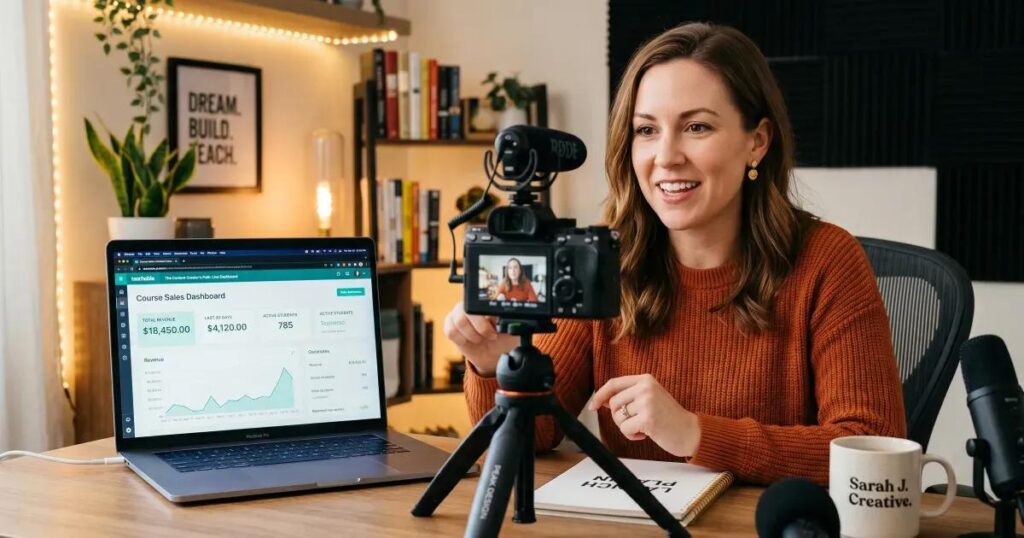
A successful YouTube strategy can create opportunities beyond growing an audience. Once you attract the right viewers and build trust, your content may support several revenue streams.
Potential opportunities include:
YouTube monetisation: Eligible creators can earn through YouTube’s monetisation programmes, subject to current eligibility requirements and policies.
Affiliate marketing: Recommend relevant products and earn commissions on qualifying purchases, with appropriate disclosures.
Sponsored videos: Work with brands whose products or services genuinely suit your audience.
Sell your own products: Promote ebooks, online courses, templates, guides or other digital products.
Promote services: Generate enquiries for website design, digital marketing, consulting or other professional services.
Drive website traffic: Direct interested viewers to relevant articles, service pages or an online store.
Build an email audience: Offer a useful resource in exchange for voluntary email sign-ups, using appropriate privacy practices.
For example, a creator who publishes videos about digital marketing could offer a related ebook, provide website design services or sell a beginner’s marketing course.
The key is relevance. Your offer should solve a problem that your viewers already care about. Avoid making every video feel like a sales pitch; provide value first and promote products or services when they genuinely fit the subject.
YouTube monetisation requirements can change, so check the official YouTube Partner Programme information before planning around advertising revenue.
11. 📣 Promote Your Videos Beyond YouTube
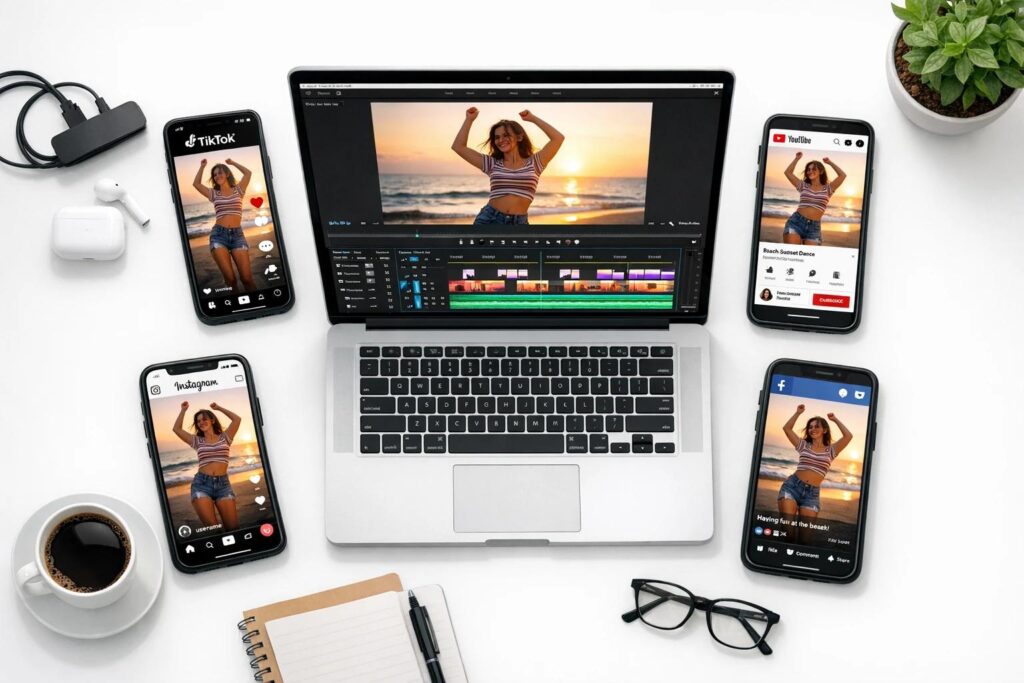
Publishing a video is only one part of your marketing strategy. Thoughtful promotion can help your content reach people who have not yet discovered your channel.
Consider these methods:
Facebook: Share your video with a helpful introduction and a reason to watch.
Instagram: Publish relevant Reels, Stories or visual highlights.
WhatsApp: Share useful videos with interested contacts or appropriate groups without spamming.
Your website or blog: Embed relevant videos in articles and service pages.
Email marketing: Send new videos to subscribers who have opted in to receive your updates.
Online communities: Participate in relevant discussions and share videos when they genuinely answer a question.
Collaborations: Work with other creators and businesses that serve a similar audience.
Do not simply post the same link everywhere without context. Adapt the message to each platform and make the benefit clear.
For example, when sharing a video about website design, explain that it shows viewers how a professionally structured website can improve their online presence.
12. ♻️ Repurpose One Video Into Multiple Pieces of Content
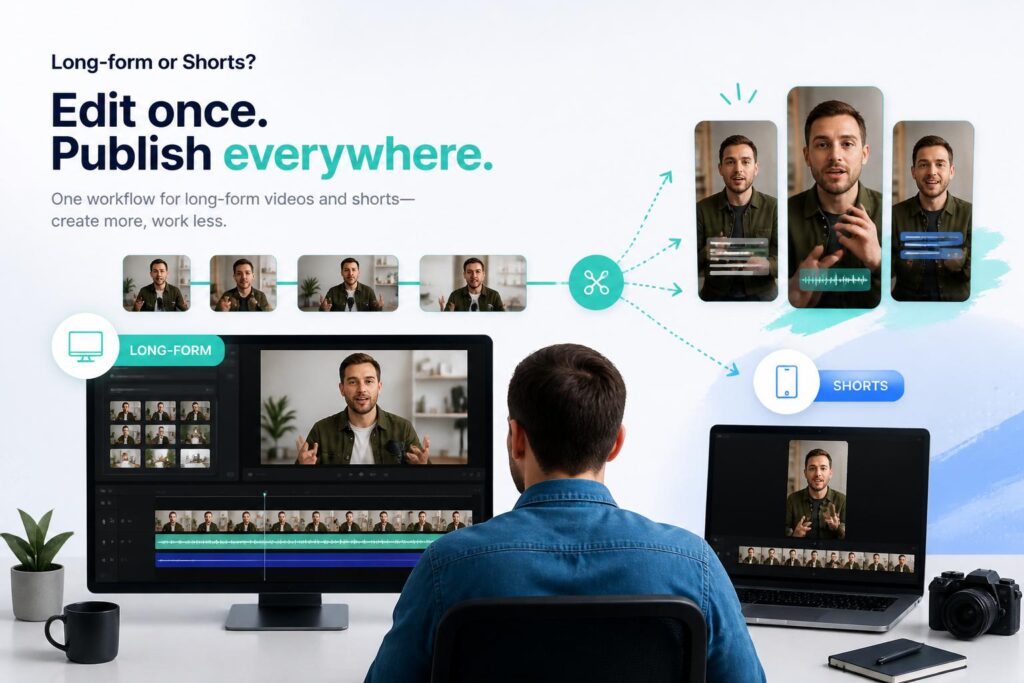
Creating original content requires time and effort. Repurposing helps you get more value from each recording while reaching people with different content preferences.
A single full-length YouTube video can become:
One full-length YouTube video
Your main educational, entertainment or product-focused piece.
YouTube Shorts
Short, focused highlights and quick tips.
Blog article
A written guide covering the same subject.
Social media graphics
Key lessons, quotes and practical tips.
Email newsletter
A summary with a link to the original video.
Repurposing should not mean copying identical content everywhere. Edit each piece to suit the platform, audience and format, and always direct people towards the most useful next step.
13. 🗓️ Your Practical 30-Day YouTube Content Strategy
You do not need to implement everything at once. Start with a manageable plan, measure the results and improve as you go.
Days
1–7
Week 1: Plan and prepare
Define your audience and primary channel goal.
Research 10 relevant video ideas.
Choose three or four content pillars.
Create your first scripts, titles and thumbnail concepts.
8–14
Week 2: Create and publish
Record and edit your first main video.
Optimise its title, thumbnail and description.
Publish a related Short.
Respond to comments and invite feedback.
15–21
Week 3: Promote and expand
Publish your next main video.
Create Shorts from useful moments.
Share your videos on relevant social platforms.
Ask viewers what they would like to learn next.
Days
22–30
Week 4: Analyse and improve
Review video performance in YouTube Analytics.
Identify your strongest topics and audience-retention patterns.
Improve titles, thumbnails or openings where appropriate.
Prepare your next month’s content calendar.
This is a starting framework, not a guarantee of growth. Focus on producing useful videos and learning from your actual results rather than chasing arbitrary posting targets.
14. ⚠️ Common YouTube Content Strategy Mistakes to Avoid
Even good creators can struggle when their strategy lacks focus. Watch out for these common mistakes:
Posting without a plan: Random topics can make it difficult to build a recognisable channel.
Weak titles and thumbnails: Viewers may overlook valuable content if its purpose is unclear.
Slow introductions: Long greetings and unnecessary explanations can cause viewers to leave before the main point.
Inconsistent quality: Poor audio, confusing editing or misleading promises can undermine trust.
Ignoring the audience: Failing to respond to questions means missing opportunities for stronger relationships and future ideas.
Copying competitors: Study successful creators for inspiration, but develop your own voice, expertise and original perspective.
Buying subscribers or views: Artificial engagement can damage the quality of your audience and violate YouTube policies.
Giving up too early: A new channel may need time to develop its content, discover its audience and build a useful body of work.
Ignoring copyright: Use music, footage and images you have permission to use, and respect applicable copyright rules.
Focusing only on views: The right audience, returning viewers, enquiries and sales may matter more than a single large view count.
The goal is not simply to upload more videos. It is to make each video more relevant, useful and effective.
Conclusion: Build a YouTube Channel With Purpose

A powerful YouTube content strategy combines planning, creativity, audience understanding, search optimisation, consistent publishing and data-driven improvement.
When you understand your audience, create content that solves real problems, package videos with compelling titles and thumbnails, and engage with your viewers, you give your channel a stronger foundation for sustainable growth.
Remember these five principles:
🎯 Know your audience.
💡 Create valuable content.
📅 Publish consistently.
🤝 Build genuine relationships.
📊 Measure, learn and improve.
You do not need expensive equipment or thousands of subscribers to begin. Start with a clear goal, a useful video idea and a commitment to improving with every upload.
Your next step: Choose one question your target audience frequently asks, turn it into a helpful video and publish it with a clear title, an attractive thumbnail and a meaningful call to action.
Your YouTube journey starts with one video — but a thoughtful strategy can help turn that first step into a valuable long-term opportunity.
🚀 Ready to Grow Your Online Presence?
Create useful content, strengthen your brand and reach more people with a consistent digital marketing strategy.
Article by Frank Jonker | Digital Marketing and Content Creation
Explore more digital marketing resources at Welkom City.